Claire Bennett
Wine Editor8 min read
Chardonnay: Taste, Best Regions, Food Pairings
What Chardonnay tastes like, why Chablis and California versions feel like different wines, the best food pairings, and how much to spend.
Chardonnay: Taste, Best Regions, Food Pairings
You’ve heard someone say “I don’t drink Chardonnay” with a slight shudder, and someone else order it like it’s the only sensible thing on the list. Both people are right, because they’re talking about wines that share almost nothing except a grape name. Chardonnay is the most flexible white on earth. Picking the right one for the moment is the whole skill.
By the end of this page you’ll know:
- The two Chardonnays at opposite ends of the spectrum (and why people who hate one often love the other)
- The single winemaking decision that turns a steel-and-citrus Chardonnay into a buttery, vanilla one
- How to read a bottle and predict which style you’re about to pour
- The exact dish that makes oaked Chardonnay taste like it was made for the plate
- The $25 upgrade that makes the biggest difference of any price jump in white wine
What Is Chardonnay?
Chardonnay is a white wine grape that started life in Burgundy, France, and now grows almost everywhere. It’s the most planted white grape in the world, with about 500,000 acres in the ground across France, California, Australia, Chile, South Africa, and beyond.
Two things made it a global superstar. First, it’s a blank canvas. The grape itself doesn’t have a big personality, so winemakers can shape the final wine through climate, oak, and a process called malolactic fermentation. Second, it grows almost anywhere. Cool Champagne, mild Burgundy, hot California, breezy Tasmania, Chardonnay makes drinkable wine in all of them.
It’s also the white grape behind serious Burgundy (Chablis, Meursault, Puligny-Montrachet) and the backbone of most quality sparkling wine, including Champagne. One grape, three completely different wine worlds.
What Does Chardonnay Taste Like?
The honest answer: it depends entirely on how it was made. There are two main families, and they barely feel like the same grape.
Unoaked, cool-climate Chardonnay (Chablis, Tasmania, cool New Zealand sites): green apple, lemon, white peach, oyster shell, wet stone. Crisp, mineral, light to medium body, high acidity. Tastes lean and refreshing.
Oaked, warm-climate Chardonnay (California, much of Australia, southern Burgundy): ripe yellow apple, peach, pineapple, vanilla, butter, toasted nuts. Round, creamy, full body. Tastes rich and golden.
The difference comes down to two winemaking moves. Oak aging adds vanilla, spice, and toast. Malolactic fermentation, a secondary process that converts sharp malic acid into softer lactic acid, adds the buttery, creamy character. A wine that skips both tastes like the lean profile. A wine that gets both is the classic California “butter bomb.”
Quick reference for what Chardonnay does in the glass:
- Body: medium to full
- Acidity: medium to high
- Sweetness: almost always dry
- Oak: ranges from none to heavy
- Alcohol: 12% to 14.5%
The most common mistake drinkers make is assuming all Chardonnay tastes like the heavy buttery version they had once. If you’ve decided you don’t like Chardonnay, try the opposite end of the spectrum from whatever you had last. There’s a very good chance you’ll change your mind.
How Do I Tell Buttery From Crisp Before I Buy?
You can read a bottle and predict the style with about 80% accuracy. Three clues:
The region. Chablis, Tasmania, and anything labelled “cool climate” or “unoaked” will be crisp. California (especially Central Coast and Napa), warmer parts of Australia, and bottles that talk about “barrel aged” or “malolactic” on the back label will be buttery.
The price-and-place combo. A $12 Australian or Californian Chardonnay is almost always built on the ripe, oaky side, because that’s what sells at scale. A $30 Chablis or a Mâconnais white will be lean and citrussy.
The colour and the label vibe. Pale straw, minimalist French label, no fancy descriptors? Probably crisp. Deep gold, lush adjectives like “rich,” “creamy,” or “barrel fermented”? Buttery.
If you want the crisp end, start with crisp whites. If you want the buttery end, these are the best buttery Chardonnays.
Where Is Chardonnay Grown?
Four regions drive the global conversation.
Burgundy, France
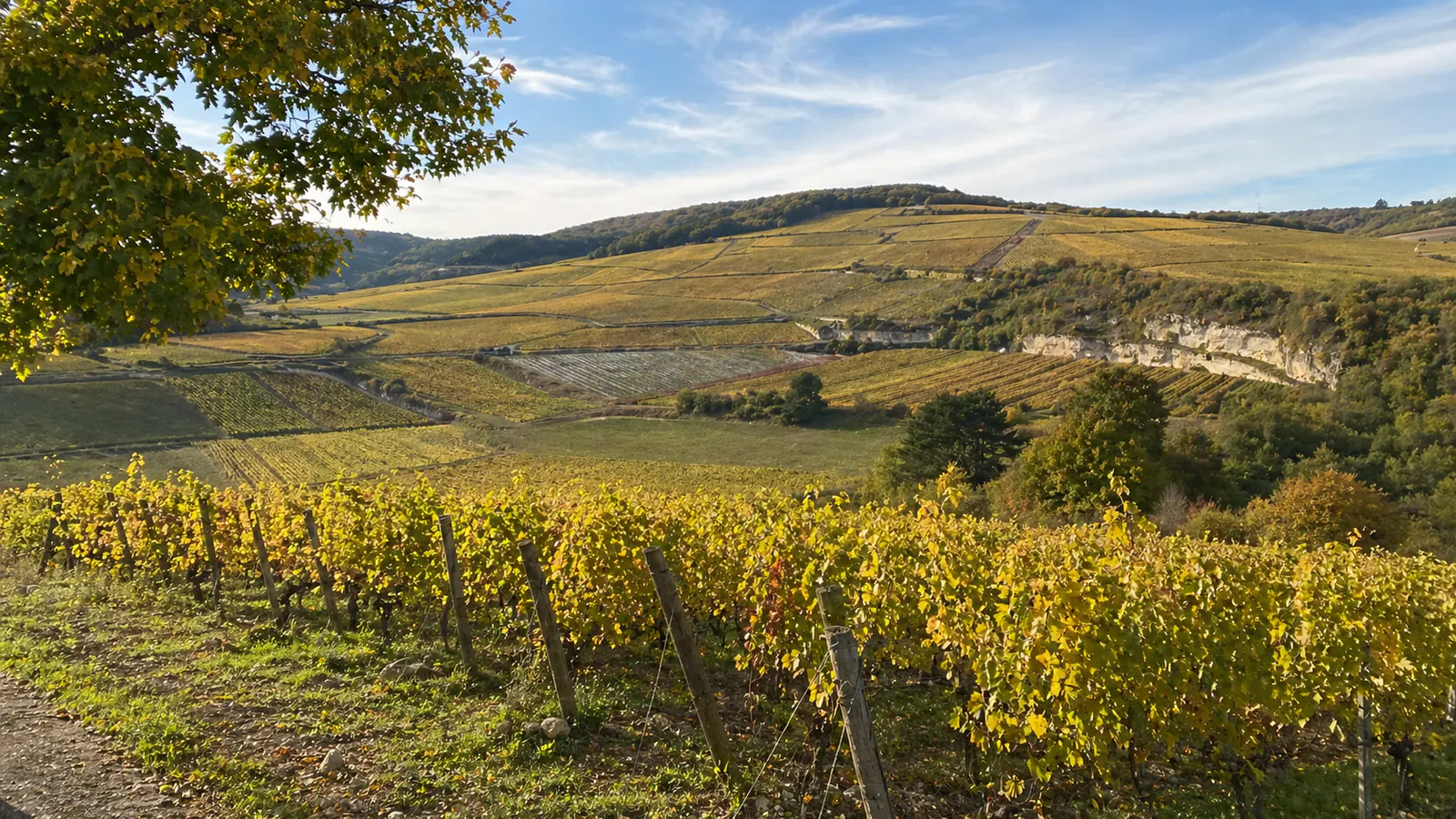
The spiritual home. Burgundy’s limestone soils produce the most refined Chardonnay on earth. Three names to know:
- Chablis: northern, cool, mostly unoaked. Green apple, lemon, oyster shell. Bottles start around $25.
- Côte de Beaune: Meursault and Puligny-Montrachet. Oaked, complex, age-worthy. $80 and up.
- Mâconnais: southern Burgundy, the value zone. Real Burgundian character at $25 to $45.
California, USA
The biggest New World producer, with styles from lean and food-friendly (Sonoma Coast) to full-on butter bomb (parts of Central Coast and Napa). Quality starts around $25.
Margaret River, Australia
A coastal sweet spot producing some of the best Chardonnay outside Burgundy. Sits between Chablis and California: ripe stone fruit, balanced oak, bright acidity. $35 to $80 for serious bottles.
Tasmania, Australia
Cool-climate, citrus-led, crisp. Also the source of much of Australia’s best sparkling. Quality bottles run $35 to $70.
What Food Pairs With Chardonnay?
The pairing depends on the style.
For unoaked Chardonnay (Chablis, Mâconnais, lean Australian or Californian):
- Oysters with lemon
- Grilled white fish like sea bass or snapper
- Sushi and sashimi
- Goat cheese salads
- Lemon roast chicken
- Crab and prawn pasta, plus the rest of the seafood pairing playbook
For oaked, buttery Chardonnay (California, Meursault, richer Australian):
- Roast chicken with butter and herbs
- Lobster with drawn butter
- Creamy pasta like carbonara or fettuccine alfredo
- Pork tenderloin with apple sauce
- Soft cheeses like Brie and Camembert
- Pumpkin or butternut risotto
- Smoked salmon with crème fraîche
What Chardonnay struggles with: very spicy food (the oak clashes with chilli heat) and red meat (no structure to keep up). For those plates, pick a different grape.
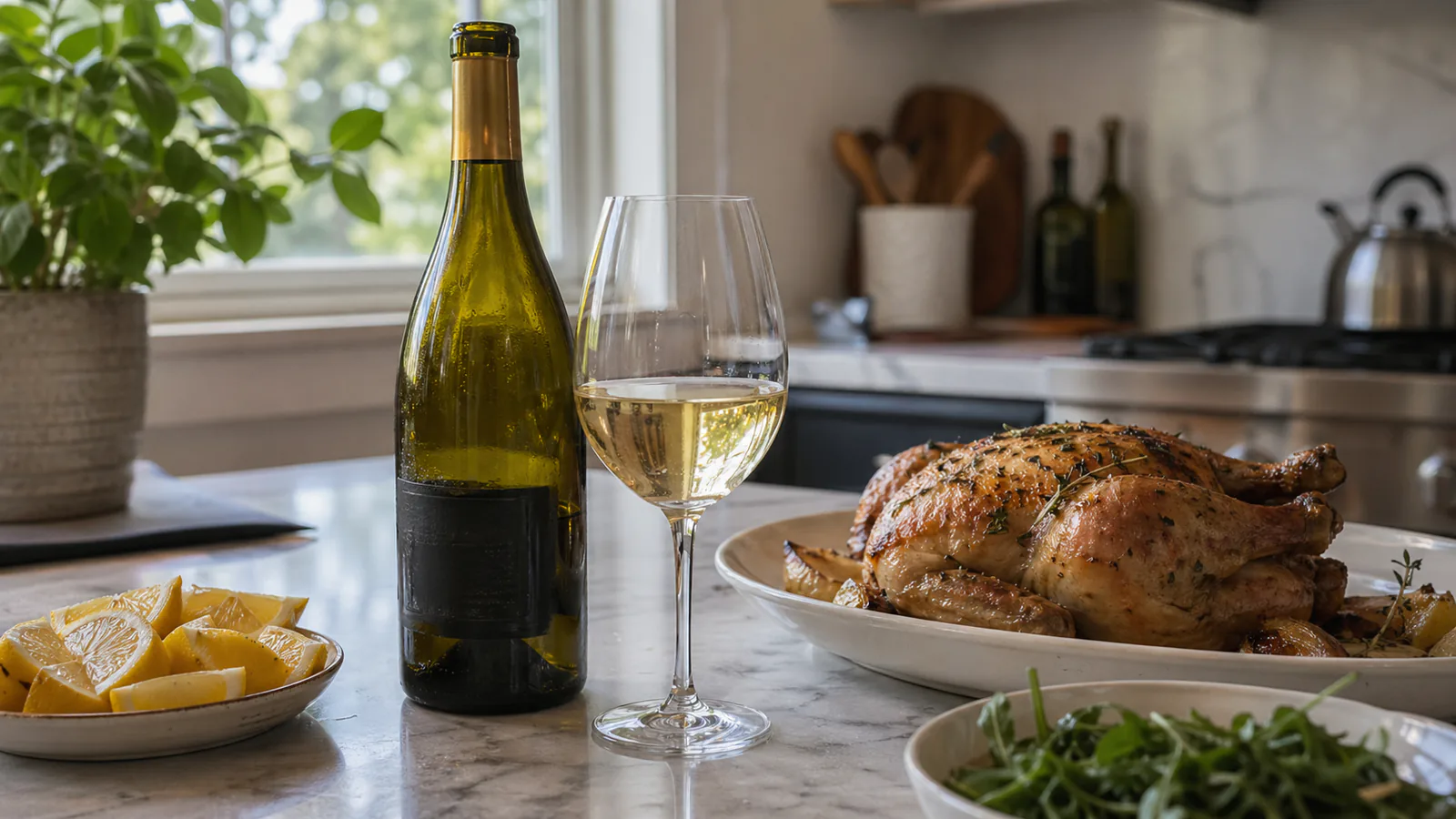
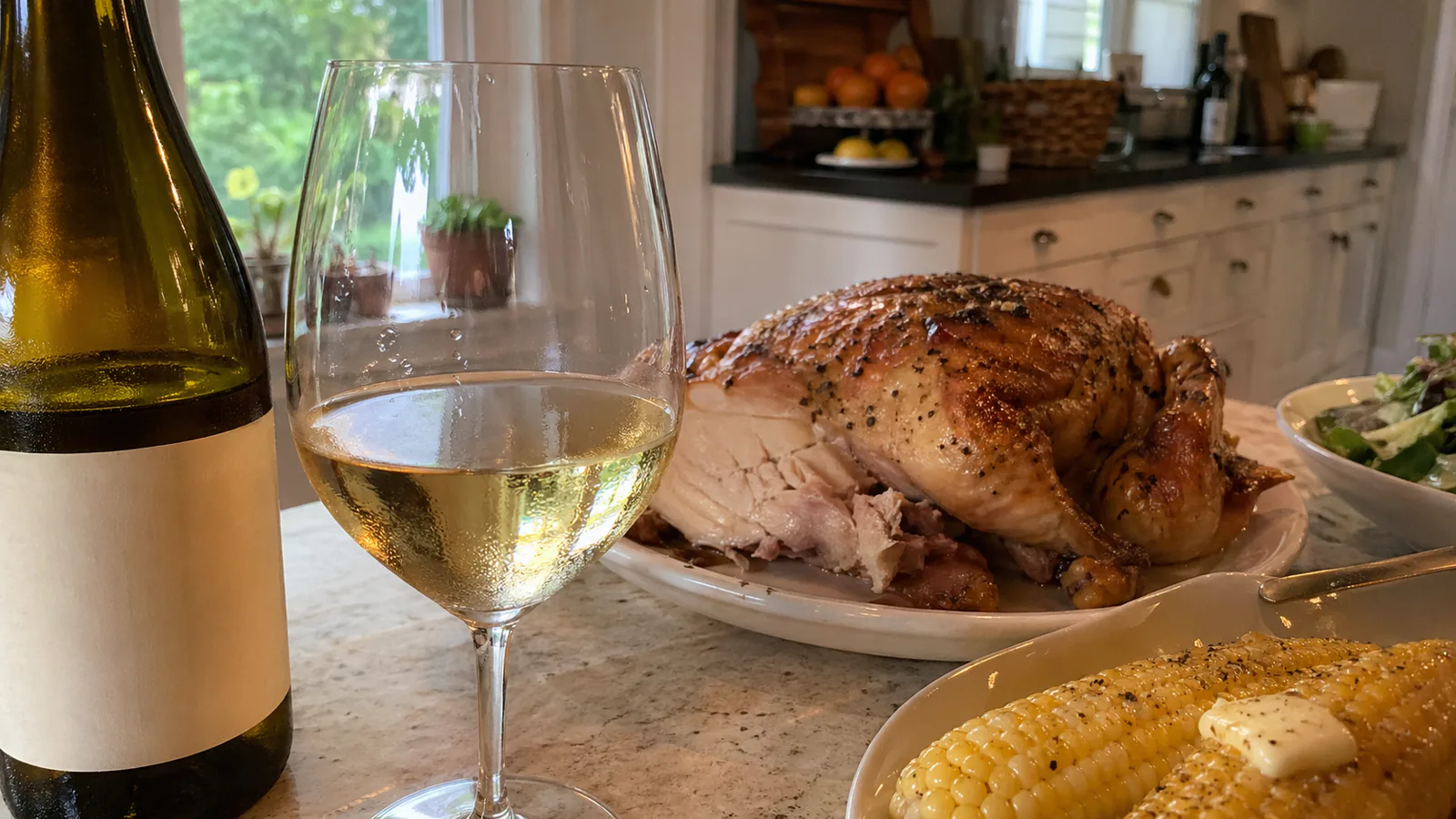
If you only remember one pairing: oaked Chardonnay with a buttery, herb-roast chicken. They were made for each other.
How Should I Serve Chardonnay?
Most people serve it too cold. A fridge-cold Chardonnay tastes muted and flat. The sweet spot is 10 to 13°C, cool but not painful. Pull the bottle out of the fridge about 15 minutes before pouring.
Lean unoaked styles can handle slightly cooler (8 to 10°C). Rich oaked styles need a little more warmth to show their texture (closer to 13°C).
A standard white wine glass works fine. For serious oaked bottles, a slightly larger Burgundy glass gives the wine more room and brings out more aroma.
An opened bottle keeps three to five days re-corked in the fridge. Rich oaked styles often taste even better on day two.
How Much Should I Spend on Chardonnay?
Three tiers worth knowing:
$10 to $15. Easy supermarket Australian and Californian Chardonnay. Ripe, oak-flavoured, crowd-pleasing. Drinkable, rarely memorable.
$20 to $40 (the sweet spot). Mâconnais, basic Chablis, Margaret River, Tasmania, Sonoma Coast. Real depth, real balance, the bottles you bring to a dinner party.
$60 and up. Premier Cru Chablis, Meursault, top Margaret River, cult California producers. Layered, age-worthy, save them for a serious meal.
The honest truth: the difference between a $15 supermarket bottle and a $30 producer Chablis is enormous. The jump from $30 to $100 is real but smaller. If you’re new to good Chardonnay, the best single upgrade you can make is moving from the $12 zone to the $25 to $35 zone.
Frequently Asked Questions
Is Chardonnay dry or sweet?
Almost always dry. The ripe-fruit, oaky California style can taste sweet because of the warmth and vanilla, but actual sugar is minimal in virtually every bottle you’ll find.
What’s the difference between Chablis and California Chardonnay?
Chablis is unoaked Chardonnay from cool northern Burgundy. It tastes of green apple, lemon, and oyster shell. The buttery California style is oaked, often goes through malolactic fermentation, and tastes of ripe peach, vanilla, and butter. Same grape, different worlds.
Why is some Chardonnay buttery?
The buttery flavour comes from malolactic fermentation, where bacteria convert sharp malic acid into softer lactic acid. That process creates a compound called diacetyl, the same one that gives real butter its flavour. Oak aging stacks vanilla and toast on top. Together they make the classic butter bomb.
Can you age Chardonnay?
Some, not most. Quality Burgundy (Premier Cru, Grand Cru) can improve for 10 to 20 years, gaining honeyed, nutty character. Most New World Chardonnay is built to drink within two to five years. Cheap bottles under $15 should be opened within a year of release.
What temperature should I serve Chardonnay at?
Around 10 to 13°C, slightly warmer than fridge-cold. Lean styles sit at the cooler end, rich oaked styles at the warmer end. Pull the bottle from the fridge 15 minutes before pouring. Too cold is the most common mistake and flattens half the flavour.
Ready to find a buttery Chardonnay worth opening this weekend? These are the best buttery Chardonnays for the money, with picks across every price tier.
Keep Reading
Burgundy Wine: The Plain-English Guide
What Burgundy wine actually is, the difference between red and white Burgundy, the classification system, and how to drink it without remortgaging.
Best Buttery Chardonnay: 8 Bottles Worth Every Sip
Eight buttery Chardonnays that deliver creaminess, oak, and tropical richness. From under $15 to the premium tier, all California, all worth it.
Types of White Wine: Crisp to Rich Guide
From crisp Sauvignon Blanc to buttery Chardonnay, here's how the main types of white wine taste, where they come from, and what to eat with them.